
Translating Blueprints to Brand Assets: The Business Value of Custom Technical Section Drawings
A marketing director or company owner at an industrial manufacturing plant in Pimpri-Chinchwad, Hinjewadi, or Talegaon knows the exact frustration of a stalled sales cycle. You have built a world-class mechanical product, your engineering team has verified the tolerances, and your factory floor has executed the build flawlessly. Yet, when your sales team presents the product to international buyers, the deals drag on because the client cannot easily grasp the internal value of your machinery. The technical superiority is trapped inside your engineering department, hidden away behind complex CAD files and dense spreadsheets that your customers simply do not have the time to decode.
When a typical creative agency tries to help, they usually make the problem worse by treating your industrial data like a consumer lifestyle product. They drop your blueprints into generic online templates, slap trendy color gradients over the layouts, and use uniform digital lines that fail to show spatial depth. They try to make a compliance document or a product manual look pretty without understanding that its primary function is clear communication. We have found that design is not about superficial decoration or using off-the-shelf shortcuts. The real challenge is establishing a clear visual hierarchy that transforms raw engineering data into a high-converting sales narrative that anyone can understand instantly.
Deploying custom Technical Product Illustrations, Pune manufacturers can bridge the gap between cold factory data and a buyer’s human brain to win more international contracts. When we developed an intricate hospital floor map system covering 8 complex floor plans, delivering the entire production-accurate framework within 2 weeks, the success relied entirely on non-verbal spatial communication. We did not need to be healthcare professionals to solve that layout problem. We succeeded because our senior designer has 40 years of personal project execution expertise since 1986, giving our studio the unique ability to organize dense spatial data into an intuitive visual journey. This comprehensive guide breaks down how custom technical layouts act as active commercial tools that protect your brand equity, accelerate your sales cycles, and prove your engineering quality to global buyers.
The fatal flaw of photographic documentation for internal components
Many marketing heads assume that hiring a commercial photographer is the most direct way to showcase a newly launched mechanical product line. While a camera lens is excellent for capturing superficial surface textures, paint finishes, and external metal casings, it is completely blind to what happens inside a sealed machine volume. When you need to show a global procurement officer how an internal valve system operates or how multiple secondary fluid channels intersect within an assembly, photography fails completely. Glare from machined steel surfaces creates hot spots that mask critical boundaries, while ambient shadows obscure the internal geometry.
If your sales team must spend twenty minutes explaining an ambiguous photograph during a high-stakes client presentation, your visual strategy is actively costing you money. A photographic print cannot separate overlapping components that share the same material finish or occupy a dark, enclosed space. It flattens the depth of a complex machine, forcing a prospective buyer to guess how the internal components actually interface with each other. Our studio eliminates this commercial friction by stripping away the irrelevant visual noise of the physical object to isolate the exact geometric boundaries of your product’s core value.
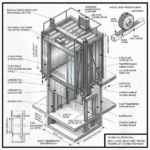
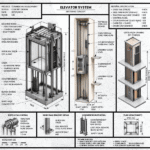
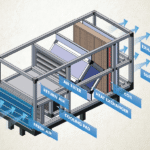
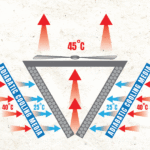
A professional graphic designer uses technical cutaway diagrams to solve this problem by removing specific sections of the external housing to reveal internal components in perfect perspective. This approach allows your marketing team to demonstrate the mechanical superiority of your equipment without requiring the physical destruction or sectioning of an expensive production prototype. We construct these visual assets directly from your raw data inputs, ensuring that every internal channel, thread path, and clearance layer is perfectly visible to the reader. It transforms a hidden mechanical process into an open, compelling sales asset that shortens buyer hesitation and sets your brand apart from low-cost competitors.
Why relying entirely on text labels is a failure of visual design
The most common mistake made by inexperienced designers and desktop publishers when handling a technical document is an over-reliance on text callouts. A standard studio will trace an engineering wireframe using a single, uniform stroke width and then slap fifty text lines across the page to explain what the reader is looking at. If a prospective customer has to read a paragraph of descriptive labels just to find a replacement component or understand a flow path, the layout has fundamentally failed. True visual communication means that the presentation hierarchy does the heavy lifting before a single line of text is processed by the eye.
When an agency uses text blocks as a crutch, they are admitting that their visual work is ambiguous. In our years of managing diverse print and digital layouts across Pune, we have treated line weight variations and color placement as an independent language that guides the human eye naturally through space. We utilize a strict layout discipline where a thick outer line instantly detaches an assembly from its background, a medium inner stroke indicates a physical change in shape, and a fine dashed line reveals a hidden channel. This structured presentation allows a busy purchasing manager to understand the layout of a component in less than three seconds without feeling intimidated by visual clutter.
This non-verbal clarity becomes an incredible commercial advantage when your marketing materials are distributed to international buyers with different language backgrounds. If your product documentation relies on dense blocks of text to explain how a system works, you must invest in expensive translation services and complete page redesigns for every export destination. A precise, custom engineering illustration that Indian exporters deploy allows the visual architecture of your hardware to do the selling automatically. By reducing text clutter, you create a universal sales asset that can be shipped across European, Middle Eastern, and Asian distribution points without a single modification, lowering your long-term marketing overheads.
Technical Product Illustrations Pune: Delivering complex navigation pathways
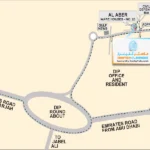
Designing navigation systems for large physical infrastructures, like a major medical facility, a corporate office, or an industrial hub, presents the exact same communication challenges as a dense product catalogue. When our family-run studio took on a critical hospital floor map project, we were handed the responsibility of condensing 8 complex floor plans into an intuitive navigational framework. The facility needed a system that patients, medical staff, and emergency personnel could interpret instantly while operating under high-stress conditions. We delivered the entire project from discovery to production-ready output within a strict 2-week timeline.
We achieved this speed by treating the architectural blueprints not as rigid engineering files, but as a layered visual interface meant for human eyes. We stripped away the dense clutter of construction notations, electrical symbols, and concrete thickness dimensions that only confuse a civilian reader. We then rebuilt the layouts using a clear hierarchy of line widths and high-contrast boundary lines to isolate primary corridors from restricted medical zones. This intentional reduction of visual noise ensured that anyone stepping out of an elevator could immediately orient themselves without needing to read a complex wall directory.
A project of this scale cannot be executed by an intern using a generic online template or an automated digital layout generator. It requires a deep understanding of human visual paths and physical print production mechanics. If your signage files feature incorrect line scales, the maps will blur into an unreadable mess when scaled up for large-scale wall installations or compressed for pocket brochures. Because we handle every single stage of the artwork execution completely in-house, we ensure that the spatial geometry remains perfectly sharp across every single physical touchpoint in the facility. You can review how we map high-density structural data by viewing our dedicated portfolio section on technical section drawings.
Elevating compliance documentation from an internal chore to a brand asset
Many manufacturing firms view their operation manuals, installation guides, and compliance documentation as secondary paperwork that can be thrown together at the last minute. This oversight is a major commercial mistake because your documentation is often the very first interaction a global buyer has with your engineering quality. If a European procurement officer opens your compliance manual and finds messy line drawings, overlapping text boxes, and confusing schematics, they will judge your manufacturing standards based on that visual chaos. Your documentation should mirror the absolute precision of your factory floor.
Custom section drawings Pune industries leverage to transform these dense, mandatory compliance files into high-value brand assets that demonstrate your professional authority. When you present your product line using clean, mathematically accurate drawings, you signal to the market that your company operates at a world-class tier. It shows that you care about the long-term maintenance of your equipment, the safety of your operators, and the speed of your field repairs. It builds immediate commercial trust before your sales team even steps into the boardroom.
Clear, accurate line drawings speed up international certifications like CE, UL, or ASME because inspectors can immediately verify your technical details. Compliance auditors do not want to wade through artistic marketing fluff or confusing studio photographs that hide the structural grounding of your hardware. They require clean, unambiguous technical drawings that isolate your safety features, earthing points, and pressure containment boundaries. By delivering files built with strict production accuracy, you prevent compliance delays, avoid expensive rewrite cycles, and get your products to international markets months ahead of your competitors.
Why scratch-built vector illustrations survive decades of product scaling
It is incredibly common for an engineering company to use basic CAD screen captures or automated tracing tools to generate its technical manuals. While this shortcut might save a few hours during the initial drafting phase, it creates a massive technical debt that destroys your layout efficiency over time. Automated tracing tools generate thousands of random, unorganized vector points that make the digital file incredibly heavy, prone to crashing standard office software, and completely impossible to edit when a machine part is updated.
Every single engineering illustration India projects require from our studio is built entirely from scratch on a clean digital canvas. We study your engineering schematics, your physical step files, and your operational parameters before we draw a single line on the grid. This custom methodology ensures that every line weight is intentional, every text anchor point is locked, and the entire file structure is organized logically into clean, editable layers. If your design team modifies a component flange or updates a fastener location next year, we can update the specific vector layer in minutes without needing to rebuild the entire drawing from scratch.
This meticulous data construction keeps your final digital assets incredibly lightweight and fast to load. A service manual containing dozens of our scratch-built line illustrations can be compressed into a compact PDF that your field engineers can open instantly on a basic smartphone in a remote location with poor internet connectivity. The lines remain perfectly clean and razor-sharp, whether zoomed in at 600 percent on a mobile screen or printed on a massive outdoor exhibition hoarding at an international trade fair. When your product story requires a human touch combined with raw mechanical precision, we integrate these clean styles into historical formats like our custom hand illustrations.
Overcoming the internal friction between engineering and marketing teams
During our years of managing industrial design projects in Pune, we have observed a constant pattern of internal tension within manufacturing organizations. The engineering department is focused exclusively on absolute technical precision, tolerance numbers, and material certifications. The marketing department is focused entirely on brand guidelines, color consistency, and corporate messaging. When a new product catalogue or technical manual is initiated, these two teams often pull the project in opposite directions, resulting in costly production delays and broken deadlines.
Our studio acts as an experienced technical interpreter between these two corporate divisions. Because our senior designer’s hands-on expertise spans four decades of production breakthroughs, we understand how to read a complex engineering blueprint while simultaneously maintaining strict alignment with your corporate brand identity. We do not ask your engineering team to compromise on mathematical accuracy to make a layout look pretty, nor do we allow your marketing materials to degenerate into unreadable technical jargon. We build custom layout grids that respect both priorities, turning your technical data into an attractive, high-converting commercial asset.
This balanced approach completely removes the friction from your internal approval cycles. Your engineering head can rest easy knowing that every stroke width and part dimension is perfectly accurate, while your marketing director can be confident that the final publication carries your corporate identity cleanly to global markets. We handle the entire execution process directly within our own studio walls, completely eliminating the need for third-party subcontractors or generic freelance writers who do not understand the difference between a torque converter and a centrifugal pump.
Why a scratch-built layout framework outlasts any online template
It is incredibly tempting for a firm to hand a massive data sheet to an intern and ask them to drop the information into a cheap online template or an automated digital layout generator. While this approach might produce a superficial result for a tiny 4-page sales flyer, it completely falls apart when confronted with hundreds of highly detailed engineering entries. Automated templates cannot make qualitative design decisions. They do not know when a text wrap looks awkward, they cannot adjust line spacing to prevent a table row from breaking across a page boundary, and they completely ignore the structural nuances of text layout hierarchy.
Every single visual asset we produce is built entirely from scratch, tailored specifically to the unique technical profile of your manufacturing line. We study the shape of your components, the maximum length of your part codes, and the specific reading habits of your global buyers before we define the document architecture. This custom approach means your documentation holds up over years of continuous service, allowing you to scale your product line from a few units to thousands without ever needing to rebuild your visual foundation from zero. It is an investment in your company’s operational infrastructure that pays dividends across every single international shipment you make.
We apply this level of precision across our full spectrum of services, ensuring that your technical graphics mesh perfectly with broader commercial materials. Whether we are aligning a corporate logo to engineering guidelines or adapting complex section drawings into high-impact tradeshow posters, the underlying mechanical discipline never varies. This operational continuity ensures that your visual identity remains as structurally sound as the machines you manufacture.
Our independent graphic design studio has spent years working directly alongside engineering heads, product managers, and industrial exporters across the local industrial belts of Maharashtra. We do not outsource our production pipeline, use templates, or compromise on the technical precision of our vector drafts. Every line weight selection, data table layout, and pre-press print preparation file is managed directly by our senior designer with 40 years of personal expertise, ensuring that your sensitive technical documentation remains completely secure, accurate, and under strict control from our first discovery conversation to the final delivery of your print-ready files. If you are currently developing an international product launch, preparing a complex installation layout, or upgrading your facility navigation maps and want to ensure your visual assets match the exact engineering standards of your physical hardware, let us talk through your structural grid requirements over a direct phone call at +91 7620819919, or you can outline your specific project scale and component details via email at info@smartsgraphics.in.
